When Will Ham Radio Hf Be Usable Again?
HF Propagation: Ionospheric Radio Propagation
Ionospheric propagation is one of the key modes of propagation used in the MF and HF bands enabling distances of thousands of kilometres to be reached.
Ionospheric propagation tutorial includes . . . .
Ionospheric propagation Ionosphere Ionospheric layers Skywaves & skip Critical frequency, MUF, LUF & OWF How to use ionospheric propagation Multiple reflections & hops Ionospheric absorption Betoken fading Solar indices Propagation software NVIS Transequatorial propagation Grey line propagation Sporadic East Spread F
Ionospheric propagation is the main mode of radio propagation used in the MF and HF portions of the radio spectrum.
The basic concepts behind HF propagation using the ionosphere are easy to empathise, and a study of it is not only fascinating, but also very useful for anyone involved in HF radio communications in whatsoever manner.
Using HF ionospheric radio propagation, it is possible to hear and talk to other stations around the earth, only a cognition of the modes of propagation and the ways they vary means that the correct times can be chosen for the best results.
HF ionospheric propagation applications
Using HF propagation via the ionosphere, radio signals can be heard around the globe – it was this form of advice that get-go opened up many global links to inaccessible regions, and also enabled international broadcasting.
HF propagation using the ionosphere was likewise used for maritime two style radio communications, although they at present utilise satellite communications.
HF radio is also used for dissemination, a fill-in for aircraft every bit well as for a variety of other forms of point to point radio communications, including for the armed forces.
Although HF radio communications is not as widely used as it once was, it is withal still important.
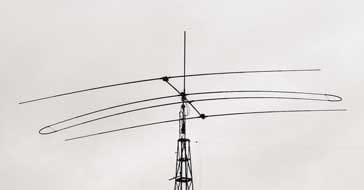
Radio amateurs or radio hams also make widespread employ of HF propagation via the ionosphere, often establishing radio communications with afar points on the globe with low powers and modest antenna systems.
HF propagation & skywaves
When using HF propagation via the ionosphere, the radio signals leave the transmitting radio antenna on Earth's surface and travel towards the ionosphere where some of these are returned to Earth.
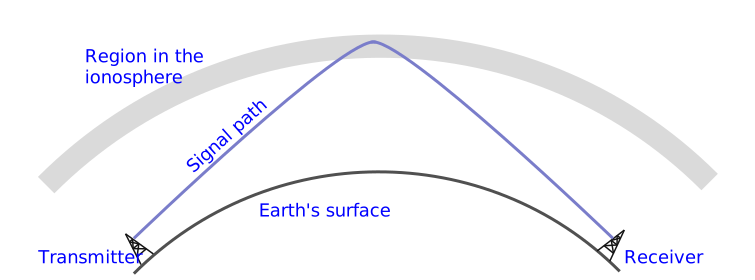
Detect how the bespeak is refracted equally information technology enters the ionospheric layer
The radio signals travelling away from the Earth's surface are termed sky waves for obvious reasons. If they are returned to Earth, so the ionosphere may (very simply) be viewed every bit a vast reflecting surface encompassing the Earth that enables signals to travel over much greater distances than would otherwise be possible.
Naturally this is a great over simplification because the frequency, time of day and many other parameters govern the reflection, or more correctly the refraction of signals back to Earth.
HF propagation & ionospheric regions
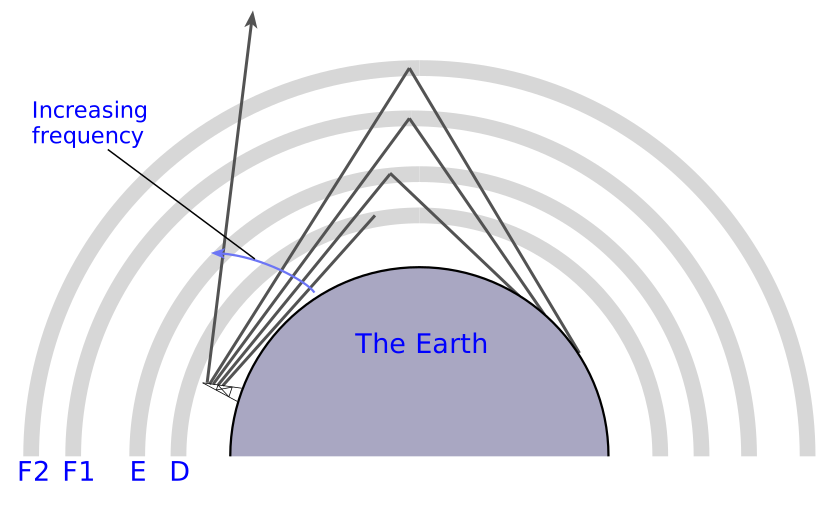
Inside the ionosphere there levels of ionisation that affect the radio waves varies. There are some areas where the levels of ionisation are higher than others. As a result it is commonly stated that there are several layers within the ionosphere. More than correctly there are a number of regions, as the level of ionisation does not reduce to zero, but instead there are several ionisation peaks.
The main regions are detailed below:
- D region: When a sky wave leaves the Earth's surface and travels upwardly, the first region of interest that it reaches in the ionosphere is called the D region. This region attenuates the signals as they laissez passer through. The level of attenuation depends on the frequency. Depression frequencies are attenuated more than higher ones.
- E region: Once the signals accept passed through the D region, they reach the E region. Although in that location is still a little attenuation of the signals, this region reflects, or more correctly refracts signals, sometimes sufficiently to render them dorsum to world. The level of refraction reduces with frequency and therefore higher frequency signals may pass through this region and on to the side by side region. The Eastward region is of smashing importance for HF propagation at the lower end of the HF spectrum and fifty-fifty the MF spectrum.
- F region: The F region or layer is the one that enables HF propagation to provide worldwide communications. Signals that manage to laissez passer through the D and E regions will achieve the F region. Once again this acts to refract signals and they can exist returned to Earth. During the twenty-four hour period this region ofttimes splits into 2, known equally the F1 and F2 regions.
HF propagation skip distance and skip zone
When signals travel towards the ionosphere and abroad from the Globe' surface, they are know equally skywaves for obvious reasons.
As they travel away from the World's surface towards the ionosphere, they well-nigh only attenuated as a consequence of the distances they travel until they achieve the ionosphere.
However the signals propagating shut to the ground exercise endure some levels of attenuation dependent upon the frequency of the transmission. The are soon attenuated to the point where they cannot be heard.
At a greater distance the signals can then be heard again once they take been reflected, or more correctly refracted back to World.
When using HF propagation, it is often convenient to define some of the distances involved.
- Skip distance: The skip altitude for a point using HF propagation via the ionosphere is the altitude on the Earth'south surface between the point where radio signals from a transmitter, transmitted to the ionosphere and refracted down by the ionosphere, to the point where they return to earth and are received.
- Skip zone: When signals are transmitted in the HF portion of the spectrum they volition only extend for a small radius effectually the transmitter via the footing wave. Beyond this they are non audible until the sky-wave is returned to world. The skip zone or silent zone is a region where a radio manual tin not be received. The zone is located between regions covered by the basis wave and where the sky-wave first returns to world.
HF propagation & frequency selection
I of the key aspects of HF propagation is to employ the right frequency. It may be possible for propagation to enable communications to exist with one area merely not another.
Because the higher frequency signals can laissez passer through the lower regions, signals on different frequencies will travel different distances. When using HF propagation via the ionosphere. Every bit the higher frequencies tend to exist reflected by higher regions, these are able to reach much greater distances equally a result of the geometry.
There are a few definitions that are used inside HF propagation circles:
- Lowest Usable Frequency, LUF: The LUF is the lowest frequency at which the received field intensity is sufficient to provide the required signal-to-noise ratio at a specific time of 24-hour interval.
- Maximum usable Frequency MUF: The MUF is the highest signal frequency that can be used for transmission between ii points via reflection from the ionosphere at a given time.
- Disquisitional Frequency: The disquisitional frequency for a given layer or region in the ionosphere is the highest frequency at which a bespeak travelling vertically upwards is reflected back to ground. This gives a practiced indication of the state of the ionosphere.
- Optimum Working Frequency: The optimum working frequency is the highest effective frequency that is predicted to be usable for a specified path and time of day for 90% of the days of the month.
Multiple reflections
Whilst information technology is possible to reach considerable distances using the F region as already described, on its own this does non explain the fact that radio signals are regularly heard from opposite sides of the globe using HF propagation with the ionosphere.
This occurs because the signals are able to undergo several "reflections". In one case the signals are returned to earth from the ionosphere, they can be reflected dorsum upwards by the earth's surface, and over again they are able to undergo some other "reflection" by the ionosphere. Naturally the signal is reduced in strength at each "reflection", and it is also found that different areas of the World reflect radio signals differently.
As might be anticipated the surface of the ocean is a very expert reflector, whereas desert areas are very poor. This means that signals that are "reflected" dorsum to the ionosphere by the Pacific or Atlantic oceans will exist stronger than those that employ the Sahara desert or the ruddy centre of Australia.
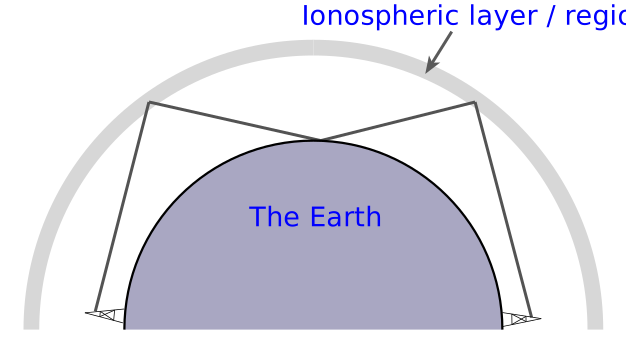
In reality, the state of the ionosphere is not as clean and clinical as we might like, and there are many means in which signals can be reflected multiple times achieve very long distances, sometimes being reflected on to another reflection by the ionosphere. Sometimes they may be ducted between the layers or regions.
Radio propagation & signal losses
It is not just the World's surface and the reflections that introduce losses into the bespeak path. In fact the major cause of loss is the D region, fifty-fifty for frequencies loftier up into the HF portion of the spectrum.
One of the reasons for this is that the signal has to pass through the D region twice for every reflection by the ionosphere. This means that to get the best signal strengths it is necessary signal paths enable the minimum number of hops to exist used. This is generally accomplished using frequencies close to the maximum frequencies that can support communications using ionospheric propagation, and thereby using the highest regions in the ionosphere.
In addition to this the level of attenuation introduced by the D region is likewise reduced. This means that a radio signal on 20 MHz for example will be stronger than one on 10 MHz if propagation tin exist supported at both frequencies. This can be a key cistron when trying to establish two way radio communications.
The Sun and HF propagation
The ionisation in the ionosphere is chiefly caused by radiation from the Sun. Every bit a event the state of the Sun and the radiation received from it governs the land of the ionosphere and HF propagation.
At that place are several primal topics concerning the Sun and the radiations received from it.
-
The Sun: The Sunday is a fascinating star - discovering all well-nigh information technology is fascinating it is own correct. Despite this, our Sunday is the main source of radiation that creates the ionosphere.
-
Sunspots & sunspot cycle: Sunspots are areas on the surface of the Dominicus that are a little cooler than the surrounding areas. Their presence leads to higher levels of radiations being emitted and therefore this affects HF propagation.
Sunspots have been recognised in the surface of the Sun for very many years, and their bear on of radio propagation was noted in one case the mode in which signals travelled over long distances started to exist understood. It was establish that at that place was a correlation between sunspots and the conditions for HF radio propagation and radio communications.
-
Solar disturbances: From time to time, massive disturbances occur on the surface of the Sunday. Solar flares, and coronal mass ejections, CMEs too give rise to increased levels of radiations which in plough affects HF propagation.
Smaller increases in radiation level tin can improve the HF radio weather condition, merely every bit they increase, it can fifty-fifty lead to a radio coma on HF.
Visible signs of solar disturbances can be visible auroras at the poles. For big solar disturbances, ionisation levels at the poles increase significantly and tin allow some specialist propagation modes at VHF allowing radio communications to be established at these frequencies. Hither stations point their antennas northwards and reflections can oftentimes be heard over reasonably long distances.
-
Sudden Ionospheric Disturbance, SID: The Sudden Ionospheric Disturbance is usually the result of a coronal mass ejection. A CME has a major effect on HF propagation atmospheric condition.
HF propagation using the ionosphere is even so a widely used as a form of radio communications. While non as reliable as satellite communications, it is non about as expensive, and can provide a useful back-up in example the satellite communications fail.
HF propagation is also widely used for dissemination, armed forces and many other organisations requiring long distance communications. HF propagation is too widely used by radio amateurs who are able to communicate across the world.
Under some circumstances information technology is possible to apply low power levels and unproblematic antennas to establish radio communications over long distances.
Every bit a issue HF propagation using the ionosphere is likely to remain in use indefinitely as a class of radio communications technology.
More Antenna & Propagation Topics:
EM waves Radio propagation Ionospheric propagation Ground wave Meteor scatter Tropospheric propagation Cubical quad Dipole Discone Ferrite rod Log periodic antenna Parabolic reflector antenna Vertical antennas Yagi Antenna grounding Tv set antennas Coax cablevision Waveguide VSWR Antenna baluns MIMO
Return to Antennas & Propagation carte . . .
hannemancomativel.blogspot.com
Source: https://www.electronics-notes.com/articles/antennas-propagation/ionospheric/hf-propagation-basics.php
0 Response to "When Will Ham Radio Hf Be Usable Again?"
Post a Comment